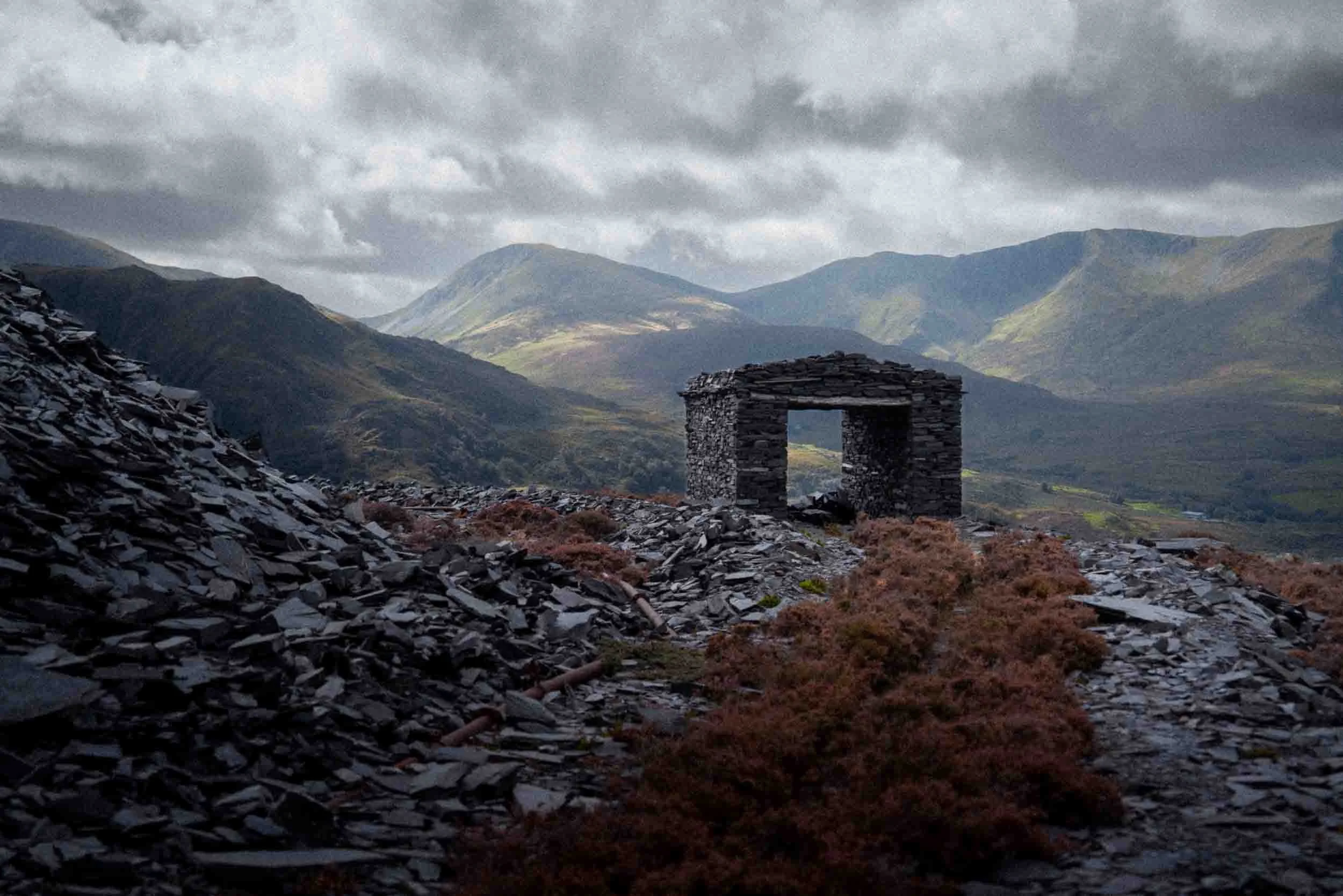
Dinorwig Slate Quarry
roofing the world
Most people head to Llanberis to climb the famous Yr Wyddfa (Snowdon), enjoying the natural beauty of the Welsh mountain ranges. However, spin around 180 degrees and you will see the landscape scarred by human activity, a reminder of Wales’s industrial past. Dinorwig Slate Quarry is one of the most imposing workings in the UK, left empty for over 50 years, it provides an exceptional opportunity to delve into the history and heritage of the area.
A brief history
Opened in 1787 the site mined slate for roofing tiles through until 1969. At its peak in the 1900s the quarry employed over 3,000 men and was the second largest slate producer in the world.
The 700-acre site is made up of over 20 galleries - each named after the quarry owner’s family, geographical locations or historical events. While productive, these galleries made it difficult to easily transport the slate to customers. To keep up with demand and to reduce costs, the quarry built a dedicated network of tramways, linking the galleries together. From there, the slate was transported to Y Felinheli (Port Dinorwig) via the Padarn railway.
“The quarrymen would build their own ceir gwyll (wild cars) - four-wheeled trucks that were either propelled by foot or by hand - to help them commute to and from work. These “wild cars” were usually owned by syndicates of men, but if you were an outsider, you could cadge a ride for 6d a week.”
A decline in the demand for slate, coupled with the increased difficulty of quarrying the mountain, led the site to close in 1969. The site was purchased by Caernarfonshire County Council and First Hydro Company (Engie) and is a UNESCO World Heritage Site. It offers hikers, climbers and people interested in Wales’s slate industry the opportunity to step back in time and explore the old workings, with plenty of public-access paths running through it.
Top spots
If you have a day spare while visiting the area, Dinorwig Quarry should be on your visit list. The lower levels and terraces, and the Anglesey Barracks are easily accessible from the Dinorwig bus terminus and carpark, though arrive early as it quickly fills up (and make sure not to block the bus stop).
However, I will caveat that this is still a dangerous place (in 2025 a huge portion of one of the rock faces collapsed) and as such much of the site is closed off to the public including some of the “instagrammable” spots. Please exercise common sense and caution when visiting the site.
I only had a morning at the quarry but managed to explore the lower levels and barracks, so here are my photos and top spots.
Dali’s Hole (Sinc Harriet)
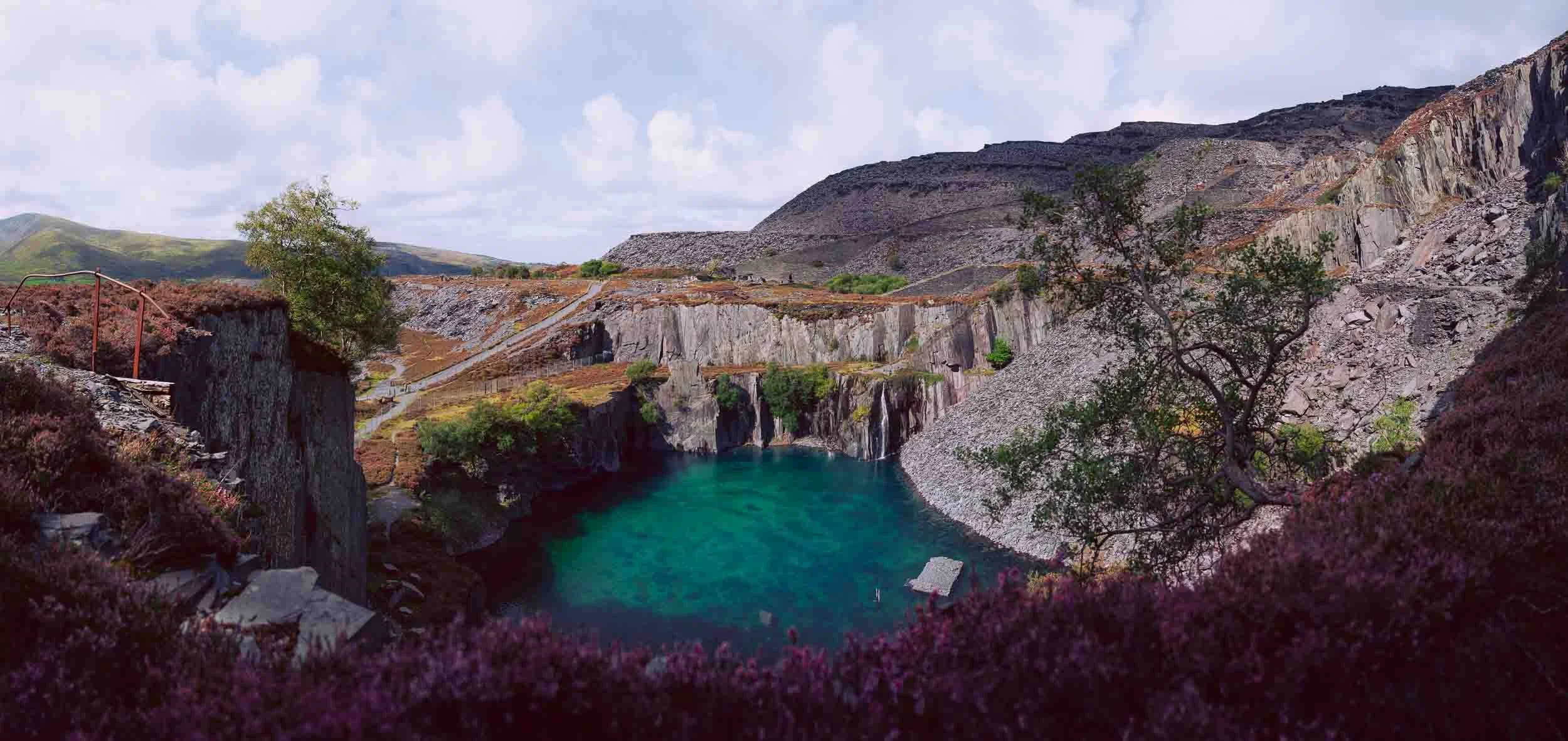
Sinks (or sinc in Welsh) were pits dug to access lower veins of slate. Water often pooled in them which meant they often had to be pumped.
This is probably one of the most photographed and Instagrammed spots in the quarry, despite being off the public path and behind a fence. However, it is fairly accessible via a quick hop over a gate and a careful scramble over some slate boulders.
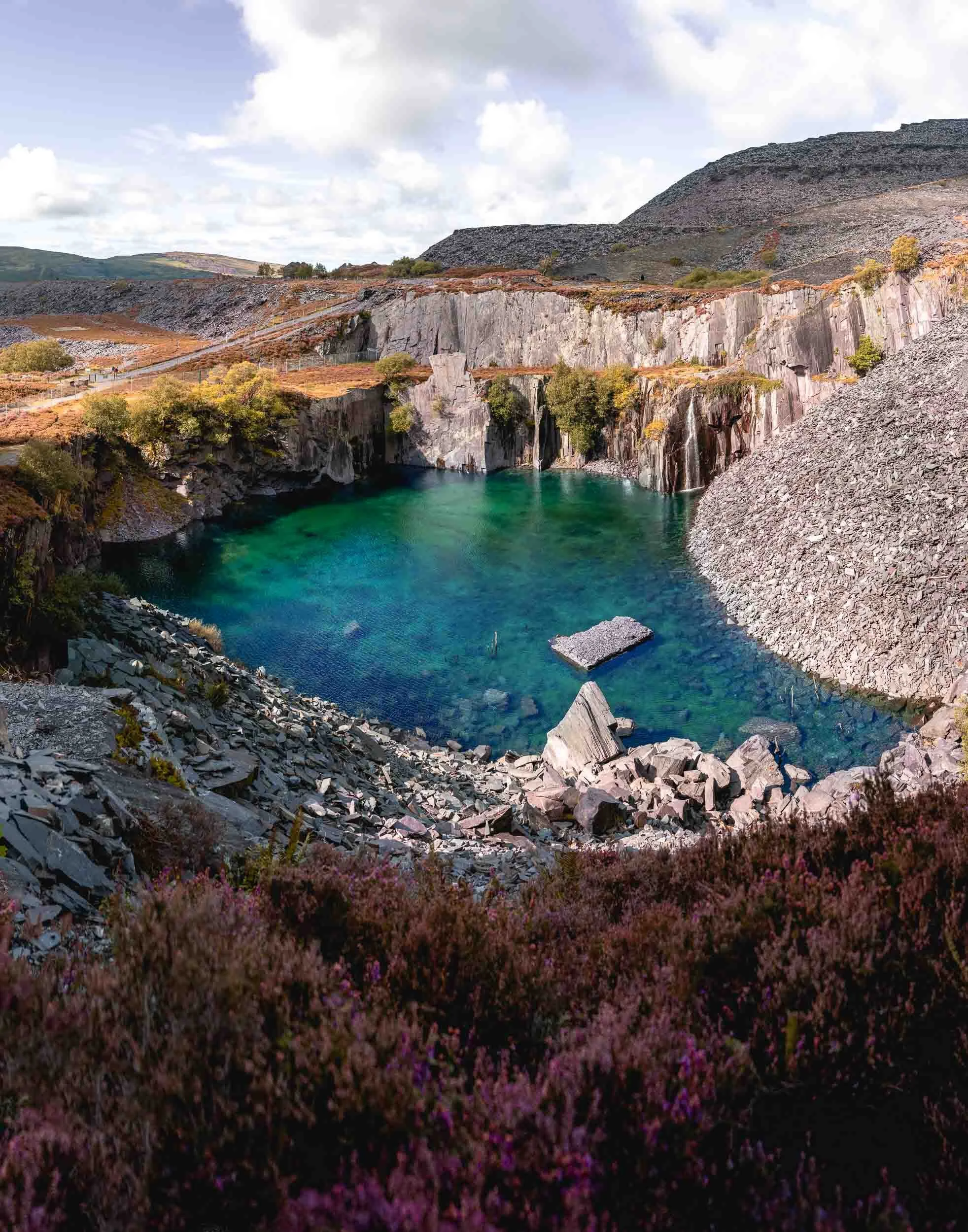
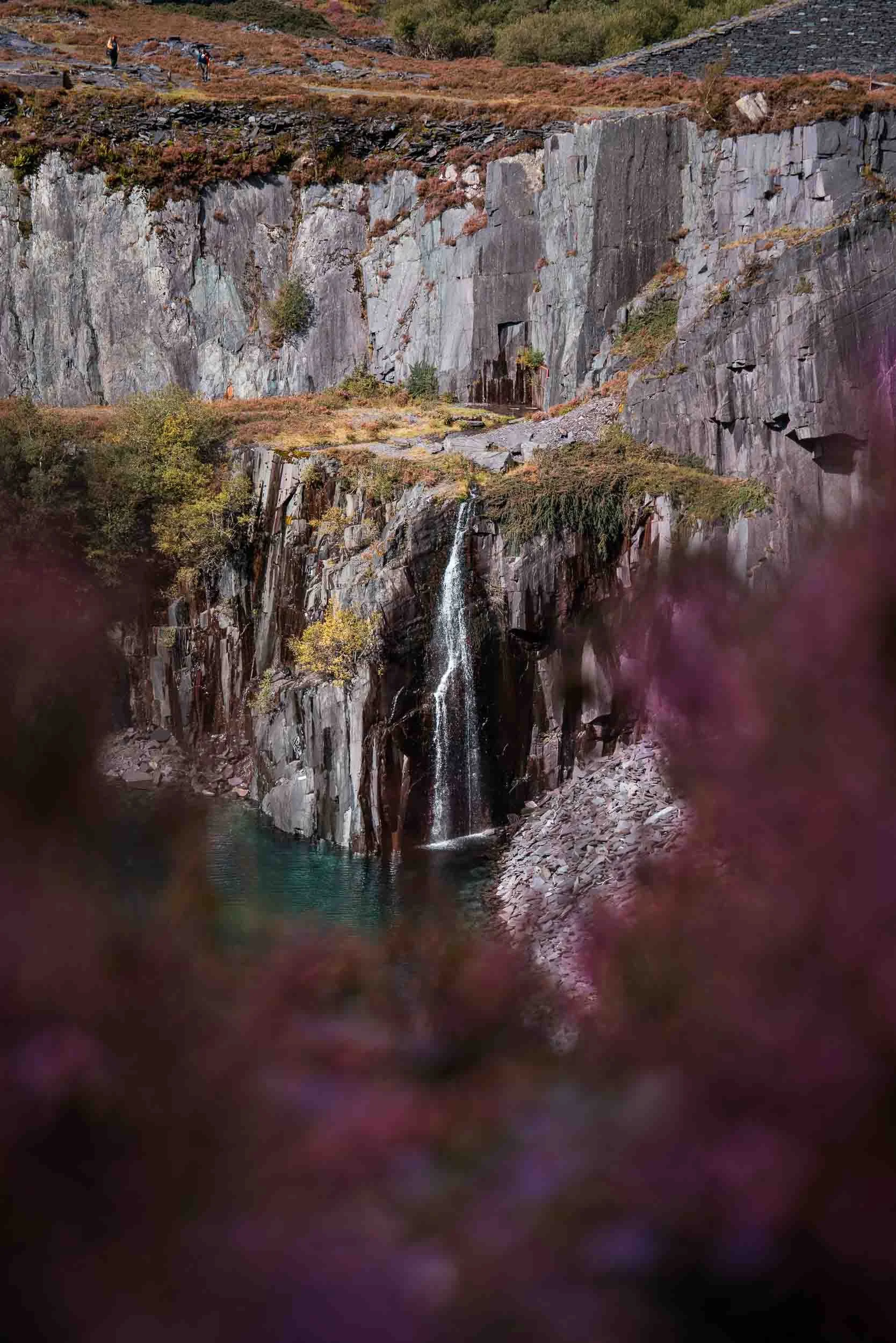
Over the summer this pool can completely dry up, leaving the bare trees and old slate building exposed. It is in fact these skeletal trees that give this lagoon its nickname “Dali’s Hole” after Dali’s surreal paintings. As I was visiting in September, there was a good amount of water in the sinc, giving it its signature azure look.
California - “the waterfall”
California - so named because it was dug at the time of the California gold rush in the United States - offers a trip into another world. Through a small tunnel you emerge into a pit where a waterfall cascades down into the depths.
If you want to see more of this working, you can continue to follow the narrow ledge path which brings you into a larger pit, peppered with climbing routes.
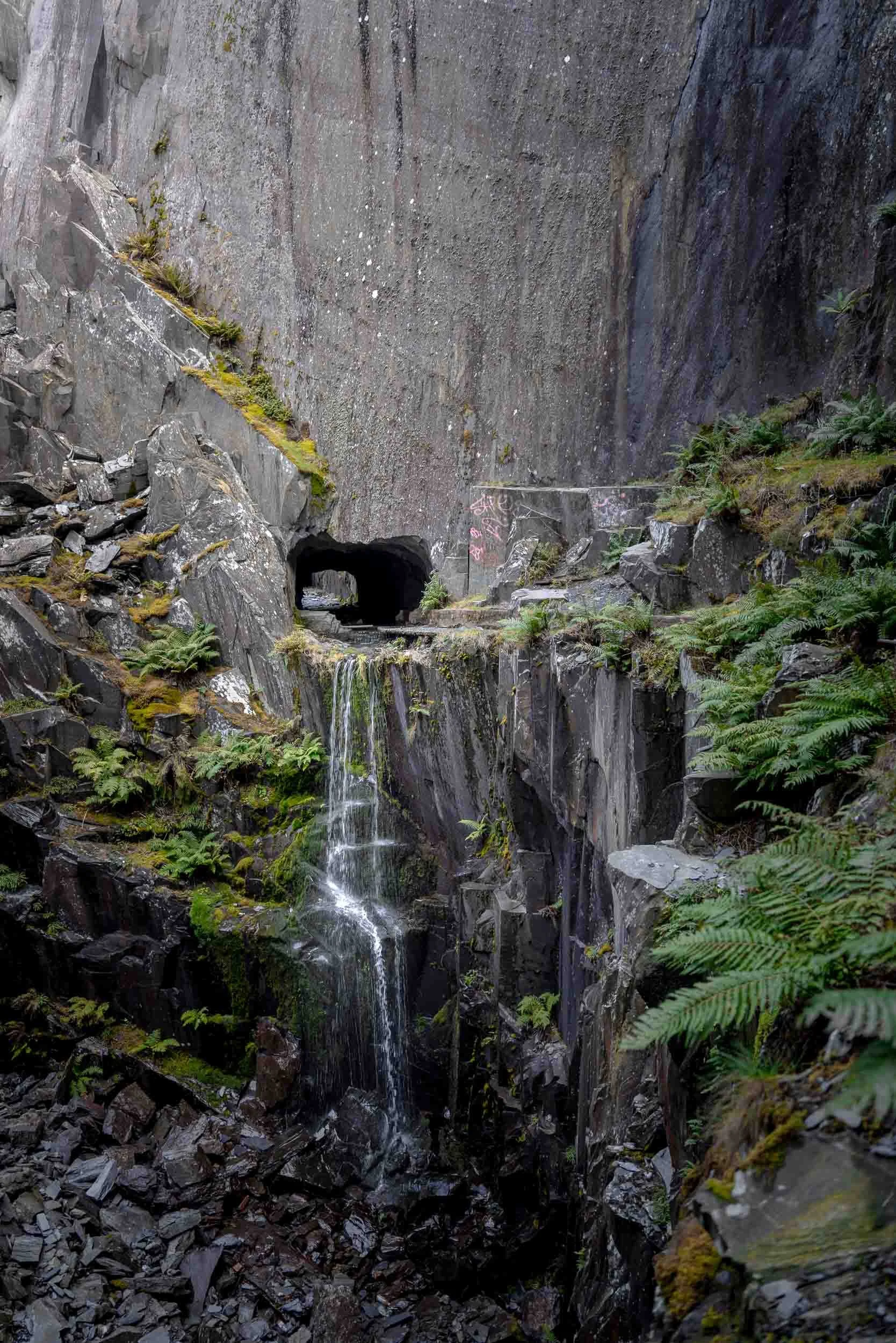
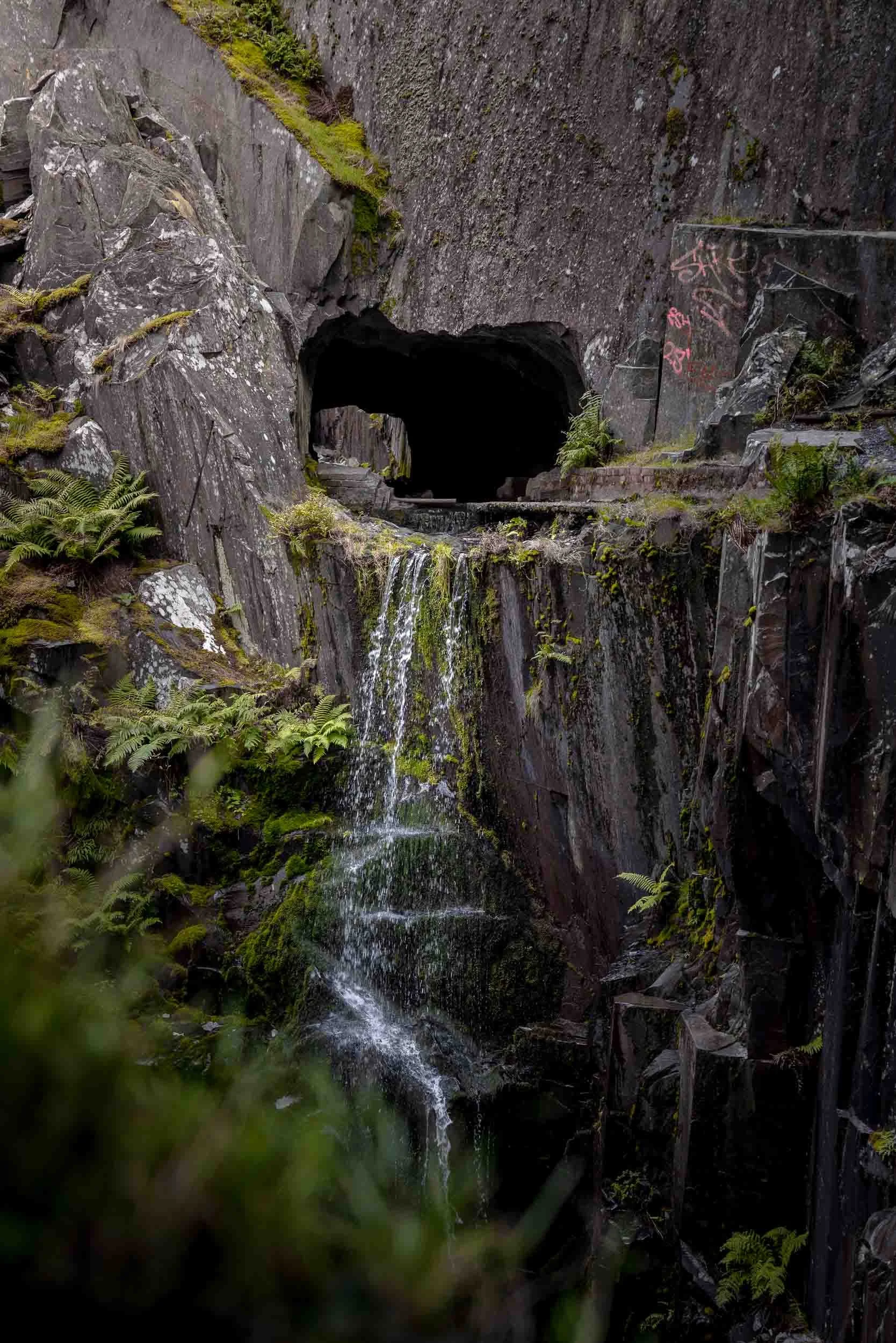
California, along with Dali’s Hole sit behind a fence and are not part of the public right of way. The land is owned by First Hydro Company and if their security guards see you off the paths, you will be asked to leave. I would recommend caution if you would like to see these spots, not least because they are on private property, but the routes to them can be a little dicey when wet.
Hydroelectric power station
After the quarry closed the UK government commissioned a consortium of companies to build the power station. The project began in 1974 as a way to provide short-term capacity to the UK’s fluctuating power needs. The power station can quickly output electricity when demand rises or there’s a sudden loss of power elsewhere across the grid. The site now has the nickname “electric mountain”. You can read more about the site on Engie’s (who operate the power station) website.
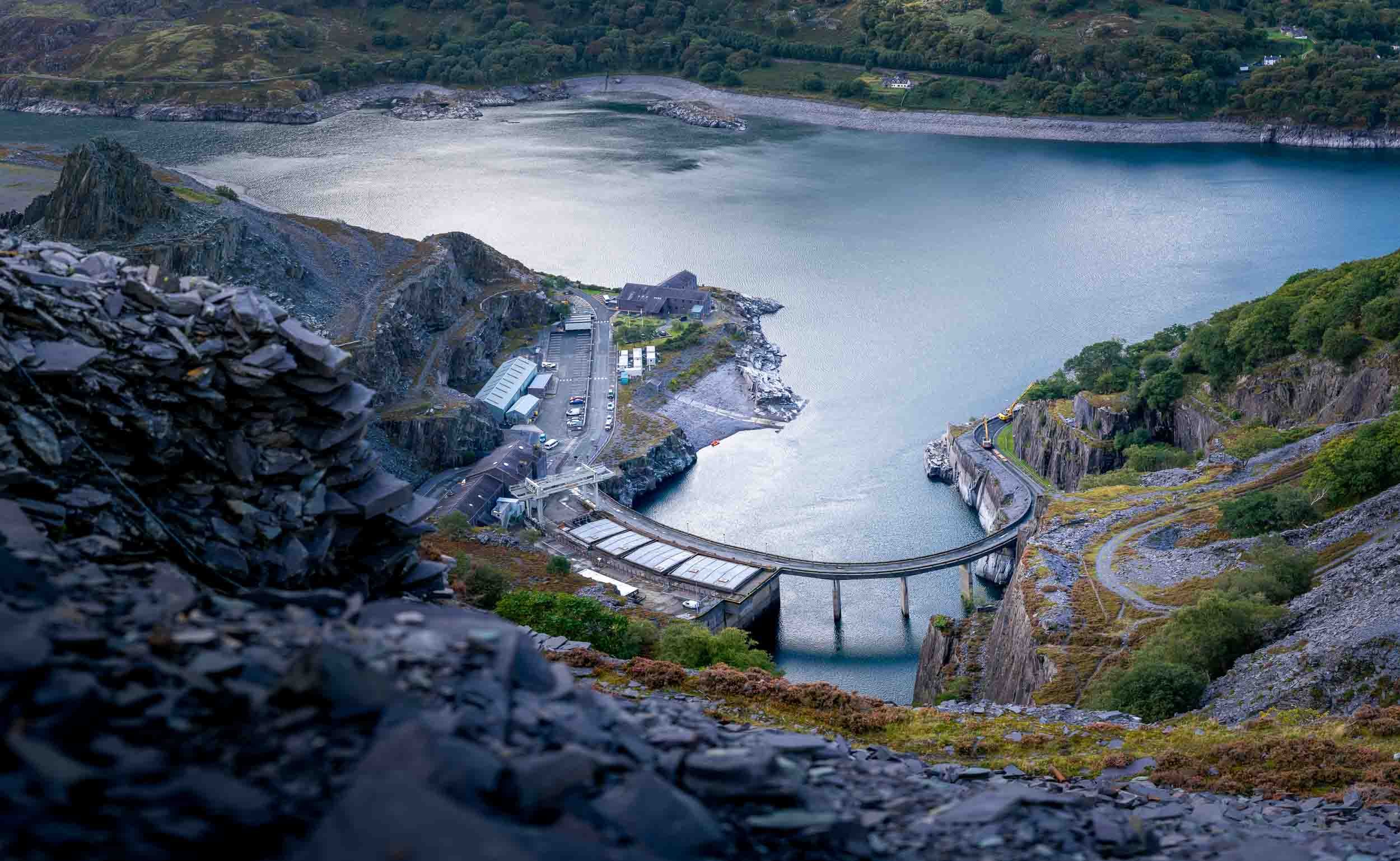
Looking down upon the service road at the hydroelectric power station and overlooking Llyn Peris.
Anglesey Barracks (Barics Dre Newydd)
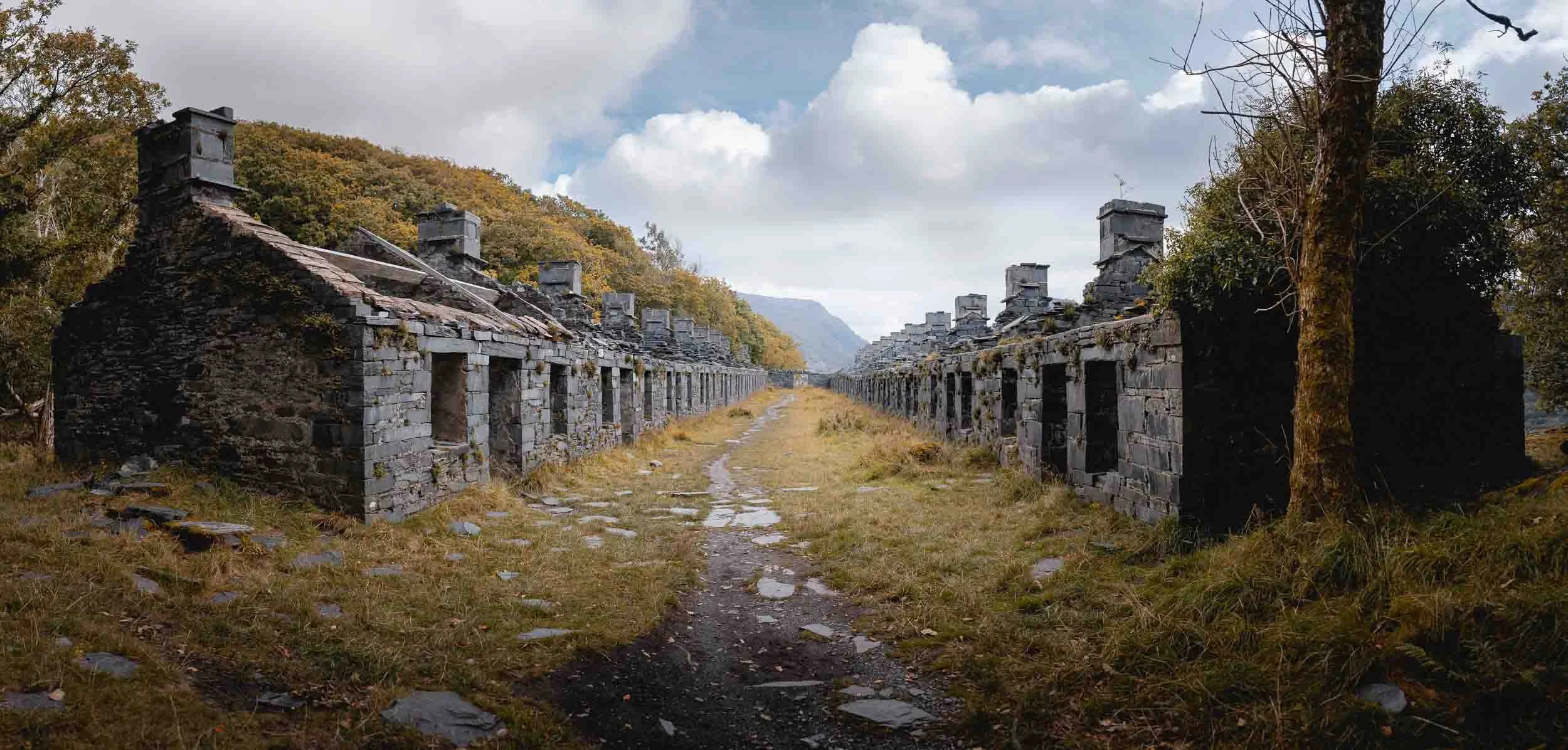
The street above the quarry; Anglesey Barracks provided poor habitation for travelling quarrymen. Comprising only a living space with a fire and a bedroom, there was no indoor toilet, running water or electricity.
The Anglesey Barracks were built in the 1870s for the quarrymen who worked at Dinorwig. It came to be named the Anglesey Barracks due to the number of men coming from the Isle of Anglesey, a few miles further west, and for whom it would be too far to travel back home each night.
The houses, configured into two rows of 11 cottages, had only two rooms and offered poor habitation for the men. In 1937 the houses were deemed unfit for human habitation and the site was abandoned.
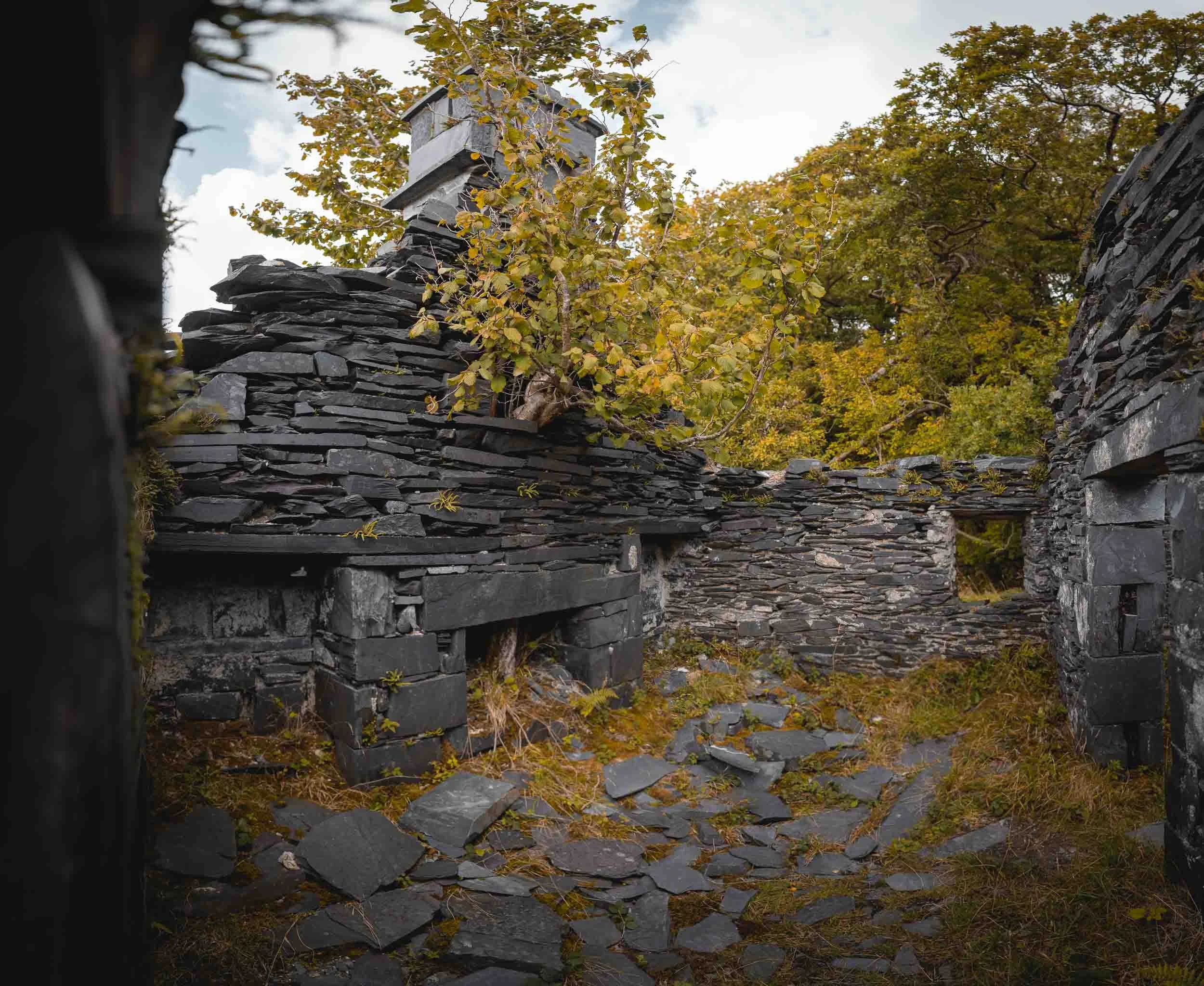
A birch tree grows in the fireplace and up and out of the chimney.
Access to the barracks is via a steep descent down from the carpark through a knotted woodland. It’s a beautiful walk but one you need to be quite fit to achieve.
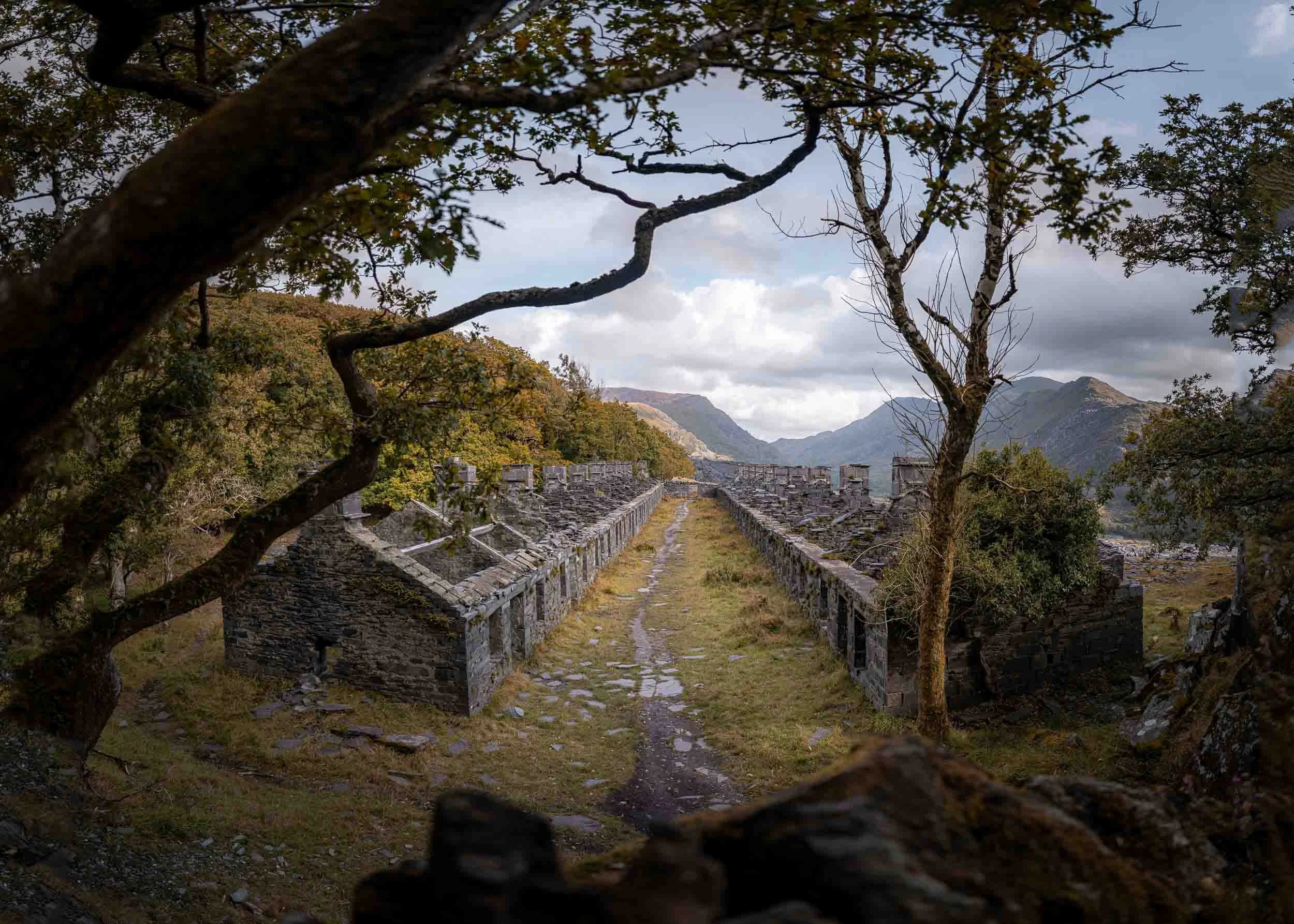
Four workers would live in one of these tiny cottages, often sharing the space with vermin such as fleas and rats.
I would recommend walking beyond the rows of cottages to explore the other dwellings that lie further on. Many of them are nestled in charming woodlands and you get great views over the surrounding landscape.
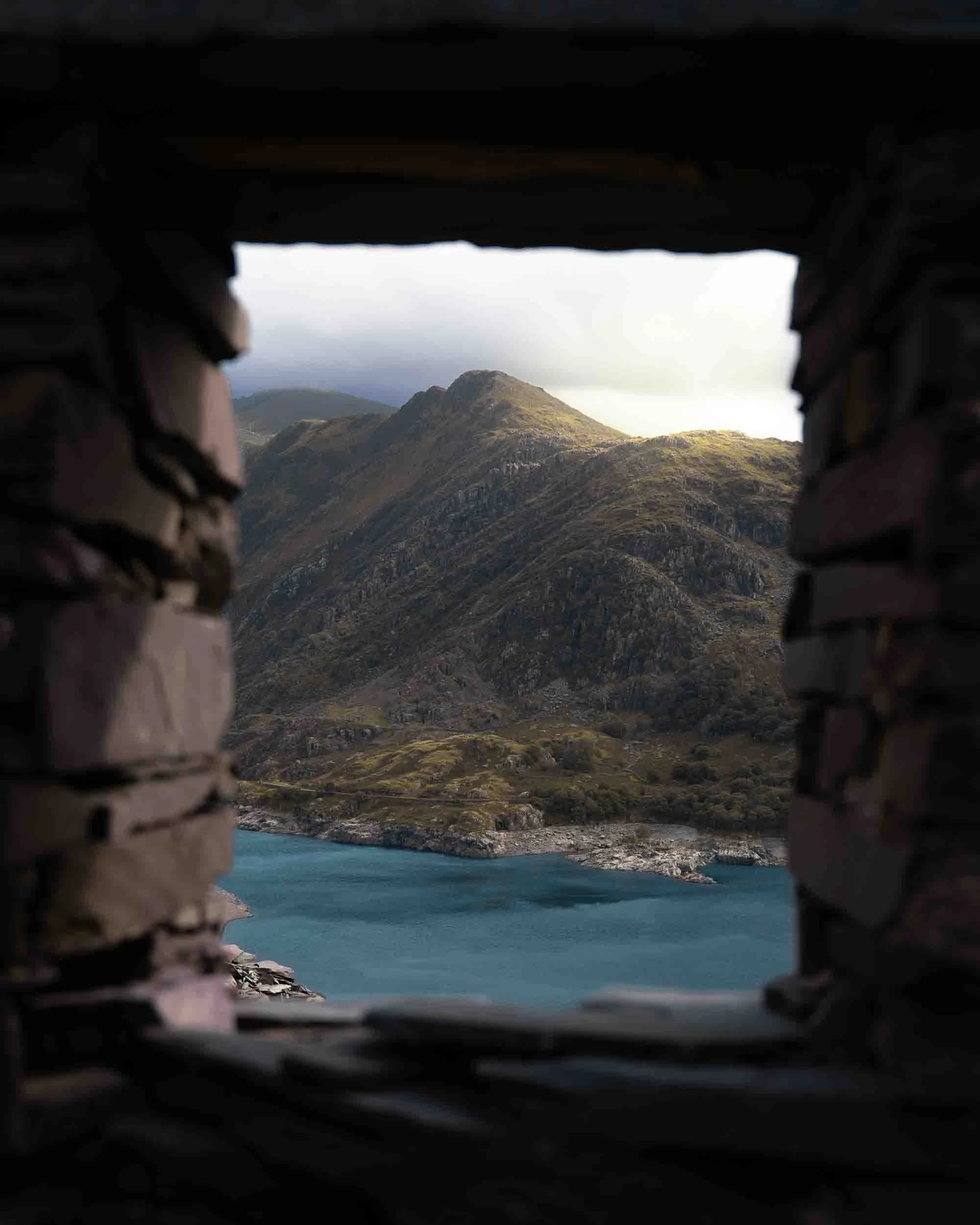
Looking over Llyn Peris towards Clogwyn Mawr.
Other notable bits
GOATS
Dinorwig is home to a population of feral goats that you hear clattering around the quarry and who regularly send slate skittering down the slopes, leaving you concerned that you will be buried under an avalanche! These sure-footed animals find their way into some precarious places, but they’re well-suited to this terrain. You’ll more than likely encounter them when you visit and you’ll smell them before you see them.
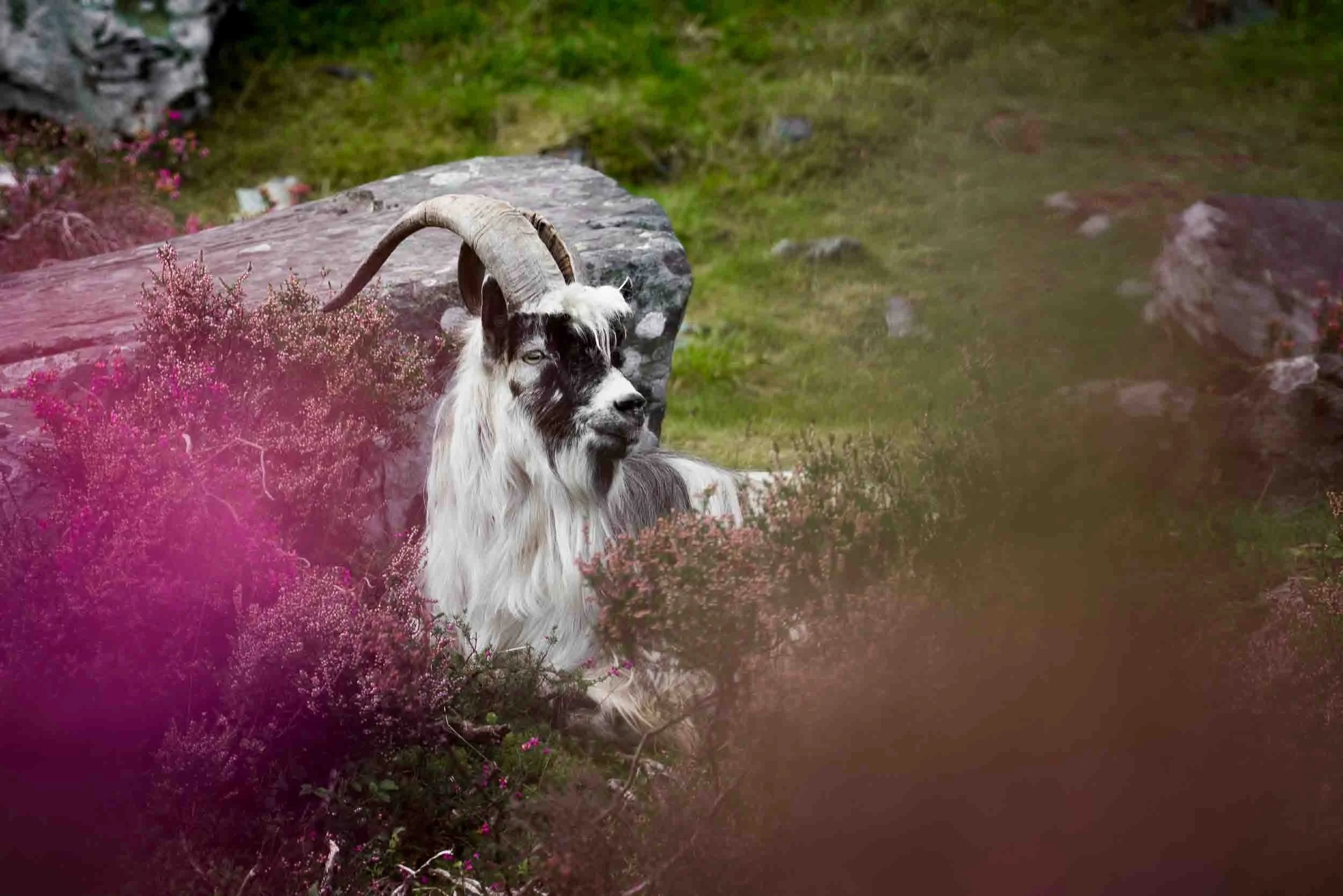
as always, leave no trace
💩
as always, leave no trace 💩
When visiting the countryside, be respectful of the people who live and work there and other countryside users. Protect the environment and check the weather to ensure you’re prepared. For more information, please see the Countryside Code.